
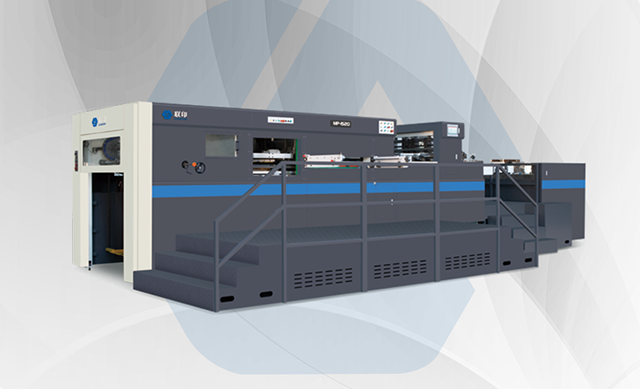
This industry-focused guide has been written for buyers, sourcing managers, distributors and directory owners
who need clear, search-engine-optimized information about the
MT 1060 automatic stamping and die cutting machine.
It is suitable for use on blogs, B2B marketplace category pages, industrial directories and
packaging machinery resource hubs.
The term MT 1060 automatic stamping and die cutting machine usually refers to a
flat‑bed automatic die cutting and hot foil stamping machine designed for
sheet‑fed packaging production. It is widely used for:
The designation “1060” typically indicates a maximum sheet format around 1060 mm width
(often about 1060 × 760 mm or similar).
Although model details vary by manufacturer, most MT 1060 automatic stamping and die cutting machines share:
This combination of automatic stamping and die cutting in a single frame makes the
MT 1060 automatic stamping and die cutting machine a preferred solution in
printing houses, packaging factories and converting plants that require medium to high‑volume production
with consistent quality and precise registration.
In industry usage, an MT 1060 automatic stamping and die cutting machine is a
post‑press packaging machine that integrates:
Automatic Feeding Unit – lifts, separates and feeds paper or paperboard sheets into the machine,
usually from a pallet or pile feeder, with side and front lay systems for sheet alignment.
Die Cutting Section – uses steel rule dies mounted in a chase against a cutting plate to cut,
crease and emboss shapes required for cartons and printed products.
Hot Foil Stamping Section (when equipped) – applies metallic foils, holographic foils or
pigment foils using controlled temperature, pressure and dwell time.
Stripping Section – removes internal waste and skeletons from the die‑cut sheet through
upper and lower stripping frames and pins.
Blanking or Non‑Blanking Delivery – either stacks full sheets or separates and stacks
individual blanks ready for folding and gluing.
Machines in this class are normally servo‑driven or cam‑driven, with strong frames and high-precision
transmission systems to ensure:
Because the MT 1060 automatic stamping and die cutting machine is commonly used in packaging lines that
operate 24/7, buyers focus heavily on automation, reliability, safety and fast job changeover.
A high‑quality MT 1060 automatic stamping and die cutting machine can be configured for many
packaging and printing applications. Common industries include:
With the integration of hot foil stamping, an MT 1060 machine can add metallic logos, security holograms,
decorative borders and branded elements directly inline, enhancing both appearance and brand value.
Buyers and production managers select MT 1060 automatic stamping and die cutting machines
for a combination of productivity, quality and flexibility. Core advantages include:
Specifications vary among different reliable manufacturers and suppliers, but the following
typical technical parameters are commonly seen in MT 1060 automatic stamping and
die cutting machine data sheets. These values are indicative only and should be verified with the
specific factory or brand.
| Parameter | Typical Value Range | Description / Notes |
|---|---|---|
| Max. sheet size | Approx. 1060 × 760 mm | Maximum format processed by the MT 1060 machine. |
| Min. sheet size | Approx. 400 × 350 mm | Smallest format allowed for stable feeding. |
| Max. mechanical speed | 6,000 – 8,000 sheets/hour | Depends on substrate, die layout and hot foil requirements. |
| Paperboard thickness | 0.1 – 2.0 mm ( typical ) | Standard printing board and light cardboard. |
| Corrugated board | Up to around 4 mm (micro‑flute) | Optional for some MT 1060 models configured for corrugated. |
| Max. die cutting pressure | 200 – 300 tons | Provides sufficient force for cutting and creasing complex layouts. |
| Foil stamping temperature | Up to 150–200 °C (adjustable) | Precise temperature control for different foils and substrates. |
| Registration accuracy | ±0.1 – 0.2 mm | Typical register precision in steady production conditions. |
| Max. pile height (feeder) | Approx. 1,000 – 1,300 mm | Including pallet; allows long runs without reloading. |
| Max. pile height (delivery) | Approx. 900 – 1,100 mm | Stable stacking with non‑stop delivery devices. |
| Total power | 30 – 60 kW (model dependent) | Includes drive motors, foil stamping heaters and vacuum pumps. |
| Air consumption | Approx. 0.3 – 0.6 m³/min | Compressed air required for stripping, blanking and auxiliary devices. |
| Machine weight | 15,000 – 20,000 kg | Robust cast and welded frame ensures stability and cutting accuracy. |
| Overall dimensions (L×W×H) | Approx. 7,000 – 9,000 × 4,000 × 2,000 mm | Varies with configuration (with or without blanking section). |
| Foil Stamping Specification | Typical Range | Notes |
|---|---|---|
| Max. stamping area | Around 1,040 × 740 mm | Depending on model and heating plate size. |
| Number of heating zones | 6 – 20 individual zones | Multi‑zone heating enables accurate temperature control by region. |
| Temperature accuracy | ±1 – 2 °C | Good control is essential for delicate foils and fine details. |
| Foil reel diameter | 450 – 600 mm (max.) | Larger reel diameter reduces downtime for roll change. |
| Number of foil reels | 2 – 4 longitudinal / transversal shafts | Configuration varies for complex designs or multiple colors. |
| Foil feeding step | Programmable, typically 1 – 999 mm | Controlled by servo or stepper motors for accurate foil advance. |
When listing MT 1060 automatic stamping and die cutting machines in a directory or catalog,
including such technical tables improves clarity for users and supports SEO by
reinforcing relevant keywords like “automatic die cutting speed”, “foil stamping temperature”
and “sheet size 1060 × 760 mm”.
Although design details differ from one manufacturer to another, most
MT 1060 automatic stamping and die cutting machines share the same
macro structure and functional groups:
When choosing an MT 1060 automatic stamping and die cutting machine, understanding
material compatibility is essential. Typical substrates include:
Reliable manufacturers and suppliers of MT 1060 automatic stamping and die cutting machines will
usually provide recommended material ranges, test charts and setup guidance to ensure good
production stability and minimal foil waste.
A professional MT 1060 automatic stamping and die cutting machine should meet
international machinery directives and generally accepted safety principles. Typical considerations:
End users may also require that die cutting and stamping processes on MT 1060 machines meet
quality system standards, such as ISO‑based procedures, particularly in pharmaceutical and
food packaging applications.
When comparing offers from different manufacturers, suppliers and factories, buyers
should evaluate both technical and commercial aspects of the MT 1060 automatic stamping and
die cutting machine. Important points include:
hot foil stamping, embossing, etc.
A clear record of installed MT 1060 automatic stamping and die cutting machines in similar
packaging segments is a strong indicator that a factory or supplier understands the real
production conditions that buyers face.
For website owners, industrial directories and B2B marketplaces, a dedicated
MT 1060 automatic stamping and die cutting machine category page is a powerful way
to attract targeted traffic. The following structural suggestions can help:
“hot foil stamping machines”, “folding carton packaging equipment”.
The following is an example of a generic specification table block that can be repeated for
multiple MT 1060 automatic stamping and die cutting machine listings from different factories:
| MT 1060 Automatic Stamping and Die Cutting Machine – Generic Model Data | |
|---|---|
| Model Category | MT 1060 Automatic Stamping and Die Cutting Machine |
| Processing Type | Automatic flat‑bed die cutting and hot foil stamping |
| Max. Sheet Size | Approx. 1060 × 760 mm |
| Substrate Thickness | Paperboard 0.1 – 2.0 mm; optional micro‑flute corrugated |
| Max. Speed | Up to 8,000 sheets/hour (depending on job) |
| Functions | Die cutting, creasing, embossing, stripping, hot foil stamping, optional blanking |
| Application Fields | Folding cartons, labels, luxury packaging, pharmaceutical boxes, cosmetic packaging |
When replicated with different vendors, this type of table gives buyers a quick, at‑a‑glance
comparison while keeping keyword phrases such as “MT 1060 automatic stamping and die cutting machine”,
“automatic die cutting” and “hot foil stamping” highly visible for search engines.
Although exact operation steps should always follow the official manual from the chosen manufacturer,
the typical workflow of an MT 1060 automatic stamping and die cutting machine includes:
install stripping and blanking tools if required.
creasing and foil stamping quality.
while monitoring sheet alignment, waste removal and stamping effects.
foil adhesion, color registration and any damage or marks.
job parameters for future repeat orders if control system supports it.
The exact length of setup time and achievable speed will depend on operator skills,
the complexity of the die layout and the level of automation of the MT 1060 automatic
stamping and die cutting machine model.
Regular maintenance is crucial for preserving die cutting accuracy and stamping quality on
MT 1060 automatic machines. Common practices include:
Many reliable manufacturers offer preventive maintenance programs, spare parts kits
and extended service contracts that help users maximize uptime and protect their investment
in MT 1060 automatic stamping and die cutting machinery.
While naming conventions differ by supplier, “1060” usually reflects the approximate
maximum sheet width of 1060 mm. The “MT” prefix is a common series
name used for automatic flat‑bed die cutting and stamping equipment in this size class.
Many MT 1060 automatic machines integrate both die cutting and hot foil stamping
functions in a single line. However, some models may be configured as die cutter‑only machines.
Buyers should verify with each manufacturer whether the unit includes a heated stamping section,
and what foil configuration options are supported.
Typical output includes folding cartons for food, cosmetics, pharmaceuticals, gifts and consumer goods.
MT 1060 machines also produce labels, tags and specialty printed items requiring precise cutting,
creasing and decorative foil effects.
Maximum mechanical speeds generally range from 6,000 to 8,000 sheets per hour,
depending on the specific model, substrate and job complexity. Realistic production speeds may be
slightly lower to maintain high quality and low waste.
Many MT 1060 machines are optimized for paperboard and thin cardboard.
Some manufacturers offer reinforced or specialized variants that can process micro‑flute
and thin corrugated board. It is important to check the stated maximum board thickness and
pressure capacity when selecting a model for corrugated applications.
The MT 1060 automatic stamping and die cutting machine category represents a key
segment of modern packaging and finishing equipment. Combining hot foil stamping, die cutting,
creasing, stripping and optional blanking in one automated line, these machines help printing
houses and packaging factories achieve:
For directories, marketplaces and industry portals, offering detailed, well‑structured information
about MT 1060 automatic stamping and die cutting machines – including definitions, advantages,
typical specifications and application fields – provides real value to users and improves
organic search visibility. By focusing on technical clarity rather than promoting any particular
brand, such content can support fair comparison and informed decision‑making for global buyers
looking for reliable manufacturers, suppliers and factories in this specialized field of
packaging machinery.
```
NÚMERO DE CONTACTO +86 18713883276(IGUAL QUE WHATSAPP) Correo: tslianshun@126.com
Dirección: pueblo de CAI he dong, pueblo de CAI ting Qi AO, condado de Y UT Ian, ciudad de Tangshan, provincia de Hebei
Copyright © 2025 Tangshan Lianshun Printing Machinery Manufacturing Co., Ltd. Todos los derechos reservados


Este sitio web utiliza cookies para garantizar que obtenga la mejor experiencia en nuestro sitio web.

 English
 Portugues
 Pусский
 العربية
 中文



 Teléfono
Comentario
(0)