<a href='https://es.cnlianshun.com/tag/high-efficiency-industrial-die-cutting-machine' target='_blank' class='key-tag'><font><strong>High Efficiency Industrial Die Cutting Machine</strong></font></a> – Top Wholesale Manufacturers & Quotes Guide
High Efficiency Industrial Die Cutting Machine – Top Wholesale Manufacturers & Quotes Industry Guide
This in‑depth industry guide explains everything wholesale buyers, distributors, and factory owners need to know
about high efficiency industrial die cutting machines and how to work with
top wholesale manufacturers and quote suppliers in the global converting and packaging sector.
Table of Contents
- definition">What Is a High Efficiency Industrial Die Cutting Machine?
- benefits">Key Advantages of High Efficiency Industrial Die Cutters
- applications">Major Industrial Applications and End‑Use Industries
- types">Main Types of Industrial Die Cutting Machines
- specifications">Typical Technical Specifications & Parameter Tables
- technology">Core Technologies Behind High Efficiency Performance
- materials">Compatible Materials and Product Formats
- wholesale">Wholesale Supply Chain & Manufacturer Profiles (Generic)
- quotes">How to Request & Compare Wholesale Quotes
- pricing">Pricing Structures & Cost Drivers for Industrial Die Cutting
- selection">How to Select the Right Machine for Your Factory
- installation">Installation, Commissioning & Operator Training
- maintenance">Maintenance, Service & Spare Parts Strategy
- standards">Industry Standards, Compliance & Safety
- trends">Current Market Trends & Future Outlook
- faq">Frequently Asked Questions for Wholesale Buyers
1. What Is a High Efficiency Industrial Die Cutting Machine?
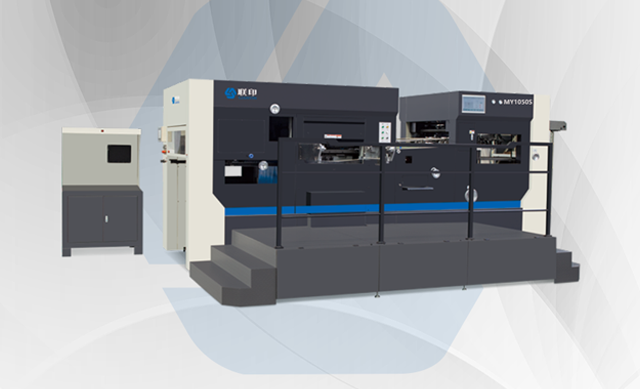
A high efficiency industrial die cutting machine is a heavy‑duty converting system used to cut,
crease, punch, or shape sheet or web materials using a specially designed cutting die. The goal is to achieve
maximum throughput, minimal waste, and consistent cut quality in large‑volume production.
In the wholesale machinery market, an industrial die cutting machine is typically designed for
continuous 24/7 operation, with automated feeding, registration, stacking, and optional
inline processes such as stripping, embossing, and hot foil stamping. High efficiency models are optimized for:
- High cycle speeds and fast changeovers
- Low setup waste and high material utilization
- Precision cutting with tight tolerances
- Reduced manual intervention through automation
- Energy‑efficient operation and lower cost per unit
From a purchasing and sourcing perspective, the phrase
“top wholesale manufacturers and quotes” refers to global OEMs, regional machine builders,
and contract manufacturers that supply complete die cutting lines, accessories, and tooling at
wholesale or OEM pricing to importers, distributors, and large end‑users.
2. Key Advantages of High Efficiency Industrial Die Cutters
Upgrading to a high efficiency industrial die cutting machine delivers measurable benefits
for packaging plants, label converters, and general manufacturers.
2.1 Productivity & Throughput
- Higher strokes per minute or meters per minute than legacy systems
- Automatic feeding, stacking, and unloading minimize downtime
- Tool‑less or quick‑change die systems accelerate job changeovers
- Integrated automation reduces dependency on manual operators
2.2 Accuracy & Repeatability
- Servo‑driven registration ensures precise cut‑to‑print alignment
- Rigid frames and linear guides maintain tight tolerances
- Digital controls and closed‑loop feedback reduce variation
2.3 Cost Reduction
- Better material yield through optimized nesting and kiss‑cutting
- Lower scrap rates due to stable cutting pressure and automatic settings
- Energy‑efficient drives and optimized hydraulics reduce power consumption
- Reduced labor cost through automation and integration
2.4 Flexibility & Customization
- Capability to process a wide range of materials and thicknesses
- Modular design to add creasing, embossing, or hot stamping
- Option to integrate offline or inline with printing and laminating lines
2.5 Quality & Brand Image
- High‑quality finished edges, clean cuts, and sharp corners
- Stable production supports consistent packaging, labels, and gaskets
- Enhanced finish options such as embossing improve perceived product value
3. Major Industrial Applications and End‑Use Industries
High efficiency industrial die cutting machines serve many sectors where
high‑volume, repeatable cutting operations are required.
3.1 Packaging & Carton Converting
- Folding cartons for food, cosmetics, pharmaceuticals, and consumer goods
- Corrugated boxes, inserts, and protective packaging
- Point‑of‑sale displays and retail packaging components
3.2 Label & Flexible Materials
- Pressure‑sensitive labels, stickers, and decals
- Flexible packaging films and laminates
- Membrane switches, adhesive components, and tapes
3.3 Automotive, Electronics & Industrial Components
- Gaskets, seals, and insulation components
- Foam components, rubber parts, and vibration dampers
- EMI/RFI shielding, thermal interfaces, and electronic spacers
3.4 Textile, Leather & Consumer Products
- Synthetic leather, fabric pieces, and apparel components
- Shoes, bags, and accessories cutting
- Household products, stationery, and craft items
3.5 Medical & Healthcare
- Medical tapes, dressings, and bandage components
- Diagnostic strips and disposable medical devices
- Cleanroom packaging and sterile barrier systems
4. Main Types of Industrial Die Cutting Machines
Wholesale buyers will typically evaluate several major machine categories.
Each type of industrial die cutter is optimized for specific materials, volumes, and tolerances.
4.1 Flatbed Die Cutting Machines
Flatbed die cutting machines use a flat die and reciprocating platen to press material against the cutting tool.
They are widely used for carton converting and corrugated packaging.
- Suitable for thicker materials and complex crease lines
- High cutting force and large sheet formats
- Commonly used with steel rule dies
4.2 Rotary Die Cutting Machines
Rotary die cutting machines use cylindrical dies mounted on a rotary press.
They are ideal for web‑fed materials such as films, labels, and technical laminates.
- Continuous operation with high meters per minute speed
- Excellent for kiss‑cutting and through‑cutting thin materials
- Can be integrated with printing and laminating lines
4.3 Digital & Laser Die Cutting Machines
Digital die cutting systems use lasers or computer‑controlled blades instead of physical dies.
These are suitable for short runs, variable data, and fast prototyping.
- No need for physical die manufacturing
- Highly flexible patterns and on‑the‑fly design changes
- Ideal for rapid sampling and just‑in‑time production
4.4 Traveling Head & Beam Press Die Cutters
Traveling head and beam press machines are used heavily in foam, leather, and textile cutting.
The cutting head moves across the material, delivering high force over a smaller area.
- Suitable for multi‑layer materials and stacked cutting
- Flexible nesting to reduce material waste
- Supports a variety of die types and sizes
4.5 Hydraulic vs. Mechanical vs. Servo Drive
High efficiency industrial die cutters may use hydraulic, mechanical, or servo drive systems:
- Hydraulic: High tonnage, robust, suited for thick materials
- Mechanical: High speed, reliable for medium‑thickness substrates
- Servo: Precise control, energy efficient, programmable profiles
5. Typical Technical Specifications & Parameter Tables
When reviewing wholesale quotes for industrial die cutting machines, the most important
technical parameters include cutting area, pressure, speed, and automation level.
The following tables provide generic reference ranges.
Values are indicative and vary depending on the manufacturer.
5.1 General Specification Comparison Table
Machine Type |
Typical Cutting Area (mm) |
Max Cutting Pressure (ton) |
Speed / Capacity |
Material Thickness Range |
|---|
Flatbed Die Cutter |
800 × 600 to 2100 × 1500 |
80 – 400 |
3,000 – 9,000 sheets/hour |
0.2 – 5.0 mm (board) up to 10 mm (corrugated) |
Rotary Die Cutter |
Web width 250 – 1600 |
20 – 150 |
60 – 300 m/min |
Film & paper 20 – 600 μm |
Digital / Laser Die Cutter |
500 × 700 to 1400 × 1000 |
Not applicable (laser power 150 – 1000 W) |
Variable; often 500 – 3,000 pieces/hour |
Paperboard, film, thin plastic up to 3 mm |
Traveling Head Press |
Head size 300 × 300 to 800 × 800 |
25 – 200 |
Up to 45 strokes/min |
Soft materials up to 150 mm stacked |
5.2 Automation & Control Configuration Table
Feature |
Basic Models |
High Efficiency Industrial Models |
|---|
Feeding System |
Manual or semi‑automatic |
Fully automatic sheet or roll feeder |
Registration |
Mechanical front lays |
Servo registration with sensor feedback |
Waste Stripping |
Manual removal |
Automatic stripping and blanking section |
Stacking & Delivery |
Manual stacking |
Automatic non‑stop pallet delivery |
Control System |
Basic PLC and push‑buttons |
Advanced PLC/HMI with recipe management |
Inspection |
Visual sampling |
Inline camera inspection (optional) |
5.3 Power & Utility Requirements Table
Parameter |
Typical Range |
Notes |
|---|
Electrical Supply |
380 – 480 V, 50/60 Hz, 3‑phase |
Check local standards and transformer needs |
Installed Power |
10 – 80 kW |
Depends on size, drive type, and automation |
Compressed Air |
5 – 8 bar, 500 – 2000 L/min |
For grippers, stripping, and pneumatic functions |
Hydraulic Oil |
As per design (if hydraulic) |
Regular monitoring and filtration required |
Floor Load Capacity |
2 – 5 tons/m² |
Depending on overall machine weight |
6. Core Technologies Behind High Efficiency Performance
Top wholesale manufacturers of industrial die cutting machines combine mechanical design,
electronics, and software to achieve high efficiency.
The following technologies are common in advanced systems.
6.1 Servo Drive & Motion Control
- Servo motors synchronize feed, cut, and stripping operations
- Dynamic speed profiles optimize acceleration and deceleration
- Closed‑loop control ensures stable registration throughout long runs
6.2 Precision Frame & Linear Guide Design
- Heavy‑duty welded frames reduce vibration
- High‑precision linear guides and ball screws maintain parallelism
- Finite element analysis used to optimize structural rigidity
6.3 Digital HMI & Recipe Management
- Touchscreen HMIs for quick access to operating parameters
- Job recipes store cutting pressure, speed, and registration settings
- Network connectivity enables remote diagnostics and software updates
6.4 Automatic Die Setting & Pressure Control
- Automatic die lock‑up reduces manual setup time
- Programmed pressure settings avoid operator guesswork
- Automatic sheet thickness measurement for fine adjustment
6.5 Inline Processes & Integration
- Hot foil stamping, embossing, and creasing in the same pass
- Integration with offset, flexographic, or digital presses
- Inline inspection to detect mis‑registration or missing features
7. Compatible Materials and Product Formats
A well‑specified high efficiency die cutting machine should handle a broad range of
industrial materials and product formats.
7.1 Common Materials
- Paper and paperboard (coated, uncoated, laminated)
- Corrugated board – single, double, and triple wall
- Plastic films – PET, BOPP, PVC, PE, PP
- Foam materials – EVA, PU, PE, and cross‑linked foams
- Rubber sheets and elastomeric materials
- Non‑woven fabrics and textiles
- Adhesive tapes and laminates
- Leather and synthetic leather
7.2 Typical Product Formats
- Die‑cut blanks for folding cartons and boxes
- Labels, stickers, and decals on rolls or sheets
- Gaskets, seals, and technical laminates on sheets or rolls
- Membrane switch overlays and foam cushioning inserts
- Custom‑shaped textile and leather pieces
8. Wholesale Supply Chain & Manufacturer Profiles (Generic)
The market for high efficiency industrial die cutting machines is served by a global
network of OEM manufacturers, contract builders, and wholesale distributors.
While no specific brand names are listed here, the following generic profiles
describe the types of suppliers buyers usually encounter.
8.1 Global OEM Industrial Machine Builders
- Design and manufacture complete flatbed, rotary, and digital die cutting lines
- Offer strong engineering support and long‑term service agreements
- Maintain worldwide service networks and training centers
8.2 Regional Specialist Converting Machinery Manufacturers
- Focus on specific sectors such as folding cartons, corrugated, or labels
- Provide customized solutions tailored to local production practices
- May offer more flexible prices and faster delivery in their region
8.3 Contract OEM Builders & Private Label Manufacturers
- Produce machines under private labels for global brands and importers
- Often located in key manufacturing hubs to optimize production cost
- Can deliver high output at competitive wholesale pricing
8.4 Trading Companies & Export Agents
- Aggregate offerings from multiple factories
- Assist buyers with language, logistics, and export documentation
- May provide easier communication but add an intermediary margin
8.5 Tooling & Die Manufacturers
In addition to machine OEMs, the supply chain includes:
- Steel rule die makers for flatbed systems
- Rotary die and cylinder manufacturers
- Laser die manufacturers and digital tool suppliers
9. How to Request & Compare Wholesale Quotes
Obtaining accurate industrial die cutting machine quotes from top wholesale manufacturers
requires structured information about your application, materials, and production targets.
9.1 Key Information to Provide in RFQs
- Material types, thickness ranges, and formats (sheet or roll)
- Maximum sheet size or web width and target output per shift
- Required processes (cutting, creasing, embossing, hot foil, stripping)
- Required level of automation and integration with existing lines
- Available factory space, power supply, and utility conditions
- Quality and tolerance requirements (registration, cut accuracy)
- Annual production volume and typical batch sizes
9.2 Elements Typically Included in Wholesale Quotes
- Base machine configuration and standard accessories
- Optional modules (stripping, blanking, foil stamping, inspection)
- Tooling and die package estimates (if requested)
- Installation, commissioning, and initial operator training
- Warranty terms and available service contracts
- Lead time, delivery conditions, and packing specifications
- Payment terms (deposit, balance, LC options)
9.3 Comparing Multiple Manufacturers’ Quotes
To evaluate offers from several top wholesale manufacturers, buyers should create a
structured comparison table. An example framework is below.
Evaluation Criteria |
Manufacturer A |
Manufacturer B |
Manufacturer C |
|---|
Machine Type & Model |
|
|
|
Cutting Area & Pressure |
|
|
|
Max Speed / Output |
|
|
|
Automation Level |
Basic / Medium / High |
Basic / Medium / High |
Basic / Medium / High |
Price (FOB or EXW) |
|
|
|
Lead Time |
|
|
|
Warranty & Service Network |
|
|
|
Energy Consumption |
|
|
|
Total Cost of Ownership (5 years) |
Estimate |
Estimate |
Estimate |
10. Pricing Structures & Cost Drivers for Industrial Die Cutting
Wholesale pricing for high efficiency industrial die cutting machines varies widely depending
on machine size, configuration, and origin.
Buyers should understand the primary cost drivers that influence quotations.
10.1 Main Cost Drivers
- Cutting area and maximum sheet or web size
- Cutting pressure (tonnage) and frame design
- Automation level (feeders, stackers, inspection, integration)
- Drive technology (hydraulic, mechanical, servo)
- Included inline processes (foiling, embossing, creasing)
- Origin of manufacture and labor cost in the producing region
- Compliance with specific regional safety or hygiene standards
10.2 Total Cost of Ownership (TCO)
In addition to the purchase price, wholesale buyers should calculate
total cost of ownership, including:
- Energy consumption over the machine lifetime
- Maintenance and spare parts costs
- Consumables (dies, cutting plates, lubricants)
- Operator labor requirements and productivity
- Downtime associated with setup and changeovers
11. How to Select the Right Machine for Your Factory
Selecting the optimal industrial die cutting machine requires aligning technology and
specification with your production strategy and customer requirements.
11.1 Define Production Requirements
- List all products and materials you intend to run
- Determine peak and average output per shift and per year
- Identify future expansion possibilities and new materials
11.2 Match Machine Type to Application
- Flatbed for folding cartons, corrugated, and thick board
- Rotary for labels, thin films, and inline web converting
- Digital for short runs, prototyping, and variable designs
- Traveling head press for foam, leather, and textile industries
11.3 Evaluate Automation & Labor
- Assess the availability and cost of skilled operators
- Consider full automation if labor cost is high or labor availability is limited
- Ensure user‑friendly interfaces to reduce training time
11.4 Factory Infrastructure & Layout
- Measure available floor space and access routes for installation
- Check ceiling height, floor load capacity, and ventilation
- Verify power supply capacity and compressed air systems
11.5 Reliability, Support & After‑Sales Service
- Confirm availability of local service technicians or remote support
- Review spare parts lead times and stocking recommendations
- Check reference installations in similar applications
12. Installation, Commissioning & Operator Training
Efficient start‑up of a high efficiency industrial die cutting machine depends on
professional installation and thorough training.
12.1 Pre‑Installation Preparation
- Finalize layout drawings and machine foundation requirements
- Ensure power, air, and hydraulic connections are in place
- Allocate space for raw materials, WIP, and finished goods
12.2 Commissioning Steps
- Mechanical assembly and leveling of the machine frame
- Electrical wiring, control system configuration, and safety checks
- Test runs with sample materials and target production speeds
12.3 Operator & Maintenance Training
- Basic machine operation, HMI navigation, and job setup
- Die change procedures, cutting plate maintenance, and alignment
- Routine maintenance, lubrication, and troubleshooting
13. Maintenance, Service & Spare Parts Strategy
To maintain high efficiency and reliability, industrial die cutting machines require
structured preventive maintenance and spare parts planning.
13.1 Preventive Maintenance Schedule
- Daily cleaning of cutting area, guides, and sensors
- Weekly inspection of dies, cutting plates, and gripper systems
- Monthly checks of drive belts, chains, and lubrication systems
- Annual inspection of frame alignment and safety devices
13.2 Critical Spare Parts
- Sensors, photocells, and limit switches
- Hydraulic seals and hoses (for hydraulic systems)
- Drive belts, couplings, and bearings
- HMI panels and minor electronic boards (as recommended)
13.3 Service Agreements with Manufacturers
- Service level agreements for response time
- Remote diagnostics and software support
- Annual inspection and calibration services
14. Industry Standards, Compliance & Safety
High efficiency industrial die cutting machines must comply with
electrical, mechanical, and safety standards in the destination market.
14.1 Safety Features
- Guarding and interlocks around moving parts and cutting areas
- Emergency stop buttons and safety relays
- Two‑hand controls where necessary for manual operations
- Safety light curtains and area scanners on some configurations
14.2 Regulatory Compliance (Generic)
- Electrical safety and EMC compliance
- Machine safety standards relevant to industrial presses and cutters
- Optional food contact material guidelines for packaging lines
14.3 Environmental Considerations
- Noise level management for worker comfort
- Oil and waste management procedures
- Energy‑efficient drives and standby modes to reduce power usage
15. Current Market Trends & Future Outlook
The global market for high efficiency industrial die cutting machines continues to evolve,
driven by packaging, e‑commerce, and automation trends.
15.1 Automation & Industry 4.0 Integration
- Real‑time monitoring of machine status and performance
- Data collection for predictive maintenance and OEE analysis
- Integration with factory MES and ERP systems
15.2 Shorter Runs & Faster Changeovers
- Increased demand for smaller batch sizes and customized packaging
- Quick‑change tooling and recipe‑based setup becoming standard
15.3 Sustainability & Material Efficiency
- More precise nesting to reduce material waste
- Energy‑efficient servo systems and optimized hydraulics
- Compatibility with recycled and lightweight materials
15.4 Growth in Digital & Laser Die Cutting
- Rapid expansion in on‑demand label and packaging markets
- Combination of digital printing and digital finishing lines
16. Frequently Asked Questions for Wholesale Buyers
16.1 What defines a “high efficiency” industrial die cutting machine?
“High efficiency” refers to high throughput, low waste, fast changeovers, and stable quality.
Machines in this category typically feature advanced automation, servo drive technology, and integrated
quality control functions that reduce manual intervention and downtime.
16.2 How long does it take to receive a machine after ordering?
Lead times depend on configuration and manufacturer workload. Generic ranges:
- Standard models: approximately 8–16 weeks after deposit
- Highly customized systems: approximately 20–32 weeks or more
16.3 What is the typical service life of an industrial die cutting machine?
With proper maintenance, high quality industrial die cutting machines can operate for
10–20 years or longer. Upgrades to controls, drives, and safety systems
may be performed during this period to extend useful life.
16.4 How important is local technical support?
For high‑volume operations, local or regional technical support greatly reduces downtime,
especially during the first year of operation. When local presence is not available, buyers should ensure
reliable remote support and fast shipment of spare parts.
16.5 Can one machine handle multiple product types?
Many high efficiency industrial die cutting machines are designed for
multi‑product flexibility, processing a variety of materials and sizes.
However, the level of flexibility depends on the design and options selected.
Buyers should discuss specific product ranges and changeover requirements in detail with manufacturers
during quotation and specification stages.
Conclusion
High efficiency industrial die cutting machines are critical assets for packaging converters,
label producers, automotive component manufacturers, and many other industries.
By understanding machine types, key specifications, pricing structures, and wholesale sourcing practices,
buyers can confidently evaluate offers from top wholesale manufacturers,
request accurate industrial die cutting machine quotes, and select equipment that
delivers long‑term productivity and cost advantages.
```



 English
 Portugues
 Pусский
 العربية
 中文



 Teléfono
Comentario
(0)