Automatic Die Cutting and Embossing Machine All‑in‑One – Manufacturers, Suppliers & Exporters Buying Guide
Automatic Die Cutting and Embossing Machine All‑in‑One Manufacturers, Suppliers & Exporters – Complete Buying Guide
This guide is designed for global buyers, sourcing managers, distributors and brand owners looking for
reliable automatic die cutting and embossing machine all‑in‑one solutions. It focuses on
industry‑wide information, technical details and purchasing criteria, without promoting any specific
companies or brands.
1. What Is an Automatic Die Cutting and Embossing Machine All‑in‑One?
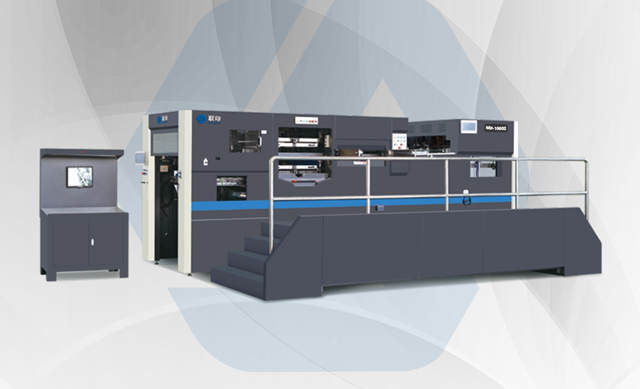
An automatic die cutting and embossing machine all‑in‑one is an integrated converting
machine that performs both die cutting and embossing operations in a single
automated process. It is widely used in packaging, printing, label, stationery and craft industries to
create high‑precision shapes and decorative textures on paper, cardboard, plastic film, metallic foil and
other substrates.
Unlike standalone die cutters or separate embossing presses, an all‑in‑one model combines:
- Automatic feeding and registration
- Creasing / scoring (optional)
- Die cutting (flatbed or rotary)
- Embossing or debossing
- Stripping, blanking, stacking or rewinding
This integration improves workflow efficiency, reduces material handling and helps achieve consistent
quality with less operator intervention.
2. Key Advantages of All‑in‑One Automatic Die Cutting and Embossing Machines
When comparing an automatic die cutting and embossing machine all‑in‑one with separate machines, buyers
typically look at the following benefits:
2.1 Productivity and Throughput
- Combined processes minimize downtime between steps.
- Inline workflow reduces manual loading, unloading and re‑registration.
- High cycle speeds and automatic feeding support mass production.
2.2 Consistent Quality
- Single pass alignment improves registration between die cutting and embossing.
- Servo‑driven systems deliver stable pressure and accurate positioning.
- Built‑in quality control features reduce scrap rate and rework.
2.3 Labor and Cost Savings
- One operator can manage more output compared to multiple separate machines.
- Shorter setup times decrease non‑productive time and job changeover costs.
- Lower floor space requirements reduce facility costs.
2.4 Versatility and Flexibility
- Handles a broad range of substrates and thicknesses.
- Supports multiple finishing effects (die cutting, kiss cutting, embossing, debossing, creasing).
- Suitable for both short runs and long runs, depending on configuration.
2.5 Better Integration in Modern Production Lines
- Easily connects with digital printers, offset presses, laminators and foil stamping machines.
- Compatible with Industry 4.0 concepts such as data monitoring and remote diagnostics.
- Allows centralized control of finishing processes for improved production planning.
3. Typical Applications and Industries
Automatic die cutting and embossing machines all‑in‑one are used across many converting and finishing
segments. Common applications include:
- Folding carton packaging (cosmetics, pharmaceuticals, food, beverages, FMCG)
- Luxury packaging with embossed logos and patterns
- Labels and tags (self‑adhesive labels, hangtags, security tags)
- Greeting cards, invitations, stationery and envelopes
- Book covers, diaries, notebooks and calendars
- Gift boxes, rigid box components and sleeves
- Corporate promotional materials and premium brochures
- Craft, hobby and scrapbook materials for professional production
- Plastic card overlays or decorative plastic sheets (depending on machine type)
The choice of machine configuration depends on the target application, substrate range and expected
production volumes.
4. Main Types of Automatic Die Cutting and Embossing All‑in‑One Machines
4.1 By Die Cutting Method
- Flatbed automatic die cutting and embossing machine
Uses flat dies and flat platens. Offers high precision and is widely used in folding cartons and
premium packaging.
- Rotary automatic die cutting and embossing machine
Uses rotary cylinders and rotary dies. Suitable for continuous webs, labels and high‑speed mass
production.
4.2 By Feeding Style
- Sheet‑fed all‑in‑one machine
Designed for sheets of paperboard, cardboard and other substrates. Typically used in commercial
printing and packaging plants.
- Roll‑to‑sheet or roll‑to‑roll all‑in‑one machine
Works with roll stock such as label stock, flexible packaging films or thin paper. Common in label
and narrow web applications.
4.3 By Level of Automation
- Semi‑automatic die cutting and embossing machine
May require manual feeding or manual stacking but still includes automatic cutting and embossing
functions.
- Fully automatic die cutting and embossing machine
Includes automatic feeding, registration, cutting, embossing, stripping and stacking or rewinding,
often with advanced control systems.
4.4 By Application Focus
- Industrial packaging machines – heavy‑duty, high‑speed, large format
- Commercial print finishing machines – mid‑range format, versatile substrates
- Label converting machines – narrow web, rotary, high precision registration
- Small format / desktop craft machines – mainly for hobby and micro‑business use
5. Core Components and Working Principle
5.1 Key Components
- Automatic feeder (sheet or roll)
- Register and alignment system (side lays, front lays, sensors)
- Die cutting station (flat or rotary)
- Embossing station (often combined with the cutting station or located inline)
- Pressure adjustment system (mechanical or servo controlled)
- Stripping / blanking section
- Delivery section (stacker, conveyor or rewinder)
- Machine frame and safety guarding
- Electrical cabinet and PLC / HMI control system
5.2 Basic Working Process
- Substrate is loaded into the automatic feeder (or mounted as a roll).
- Sheets or web are transported into the register section and positioned accurately.
- Material enters the cutting and embossing station where the die and embossing plate apply pressure.
- Die cutting produces the required shapes while embossing creates raised or recessed patterns.
- Waste matrix is stripped away and finished blanks are separated.
- Finished products are stacked, counted, or rewound depending on the configuration.
In many all‑in‑one automatic die cutting and embossing machines, embossing can be performed
simultaneously with cutting using combination tools, or in a separate inline station for more complex
effects.
6. Typical Technical Specifications
Specifications vary across manufacturers and models, but the following tables illustrate typical ranges for
industrial automatic die cutting and embossing machine all‑in‑one systems.
6.1 General Specification Range
Parameter |
Typical Range |
Notes |
|---|
Max sheet size |
750 × 520 mm to 1450 × 1100 mm |
Large‑format machines can be even bigger |
Min sheet size |
350 × 300 mm to 550 × 450 mm |
Depends on feeder design |
Max mechanical speed |
3,000 – 9,000 sheets/hour |
Flatbed packaging machines are often 5,000–7,500 sph |
Die cutting force |
150 – 350 tons |
Higher force required for thicker board and embossing |
Material thickness |
80 – 2,000 g/m² (paperboard); up to ~4 mm corrugated |
Custom machines can handle special substrates |
Embossing depth |
0.1 – 2.0 mm |
Depending on substrate, tooling and pressure |
Max roll width (for web machines) |
330 – 1,300 mm |
Common for label and flexible packaging lines |
Power supply |
380 – 480 V, 50/60 Hz, 3‑phase |
Configured according to local standards |
Installed power |
10 – 60 kW |
Higher for large, high‑speed models |
Machine weight |
5 – 25 tons |
Industrial all‑in‑one equipment is heavy |
Overall dimensions |
5 – 12 m length, 2 – 4 m width |
Plus additional space for operation and maintenance |
6.2 Feature Comparison Table
Feature |
Entry Level |
Mid Range |
High End |
|---|
Automation level |
Semi‑automatic feeding and delivery |
Fully automatic with basic PLC control |
Fully automatic, servo driven, advanced HMI |
Register system |
Mechanical lays |
Mechanical + photoelectric sensors |
High‑precision servo register and camera options |
Embossing capability |
Basic single‑level embossing |
Multi‑level and combination embossing |
Multi‑level, textured, micro‑embossing support |
Die changeover |
Manual with tools |
Assisted with positioning devices |
Quick‑lock systems, memory settings and presets |
Integration |
Standalone operation |
Can be connected to feeders or stackers |
Inline with printers, coaters and logistics systems |
Quality control |
Manual sampling |
Basic counting and error alarms |
Inline inspection, reject gates, data logging |
7. Compatible Materials and Substrates
A modern automatic die cutting and embossing machine all‑in‑one can process a wide variety of materials.
Buyers should verify the exact material range with potential suppliers, but common substrates include:
- Coated and uncoated paper (80 – 400 g/m²)
- Solid bleached sulfate (SBS) and other paperboard grades
- Folding boxboard for consumer packaging
- Micro‑flute and lightweight corrugated board
- Laminated paper and card stock
- Metallic paper and foil‑laminated board
- Self‑adhesive label stock (for roll‑to‑roll machines)
- Thin plastic sheets and film (within thickness limits)
The hardness, thickness and surface finish of the material all affect the required die cutting pressure,
embossing depth and choice of tools.
8. Important Features to Consider When Buying
When sourcing from automatic die cutting and embossing machine manufacturers, suppliers or exporters, pay
careful attention to the following functional features and options:
8.1 Automation and Control
- PLC control system with user‑friendly HMI touch screen
- Job memory and parameter recall for repeat orders
- Automatic lubrication and maintenance reminders
- Remote diagnostics and software upgrade capability
8.2 Feeding and Registration
- High‑reliability automatic feeder with non‑stop loading options
- Side and front lays for precise sheet positioning
- Double‑sheet, skew and mis‑feed detection systems
- Vacuum suction and air blast for stable sheet transport
8.3 Cutting and Embossing Performance
- Stable frame and platen construction for accurate pressure distribution
- Fine pressure adjustment with micrometer or servo control
- Compatibility with different die materials (steel rule, solid dies, rotary dies)
- Support for kiss cutting, perforating, creasing and scoring
- Multi‑level embossing and combination embossing/die cutting tools
8.4 Stripping and Delivery
- Automatic stripping section to remove internal waste
- Blanking section for separating and stacking individual blanks
- Non‑stop delivery with automatic pallet change (for high‑volume production)
- Counting, batching and labeling functions
8.5 Safety and Compliance
- Emergency stop buttons at key positions
- Safety light curtains and mechanical guards
- Interlocks for access doors and hoods
- Compliance with CE, UL or other relevant safety standards
8.6 Energy Efficiency and Environmental Considerations
- Energy‑efficient motors and drives
- Low noise and vibration design
- Options for dust extraction and waste handling
- Compatibility with eco‑friendly substrates and inks
9. How to Choose the Right Automatic Die Cutting and Embossing Machine All‑in‑One
Selecting the right machine from global manufacturers, suppliers or exporters involves matching technical
capabilities with your business requirements. Use the following criteria as a structured checklist.
9.1 Define Production Requirements
- Average and peak monthly production volume
- Maximum sheet or web size you need to process
- Range of substrates and thicknesses used
- Typical run lengths (short runs vs. continuous mass production)
9.2 Evaluate Technical Fit
- Required precision and registration tolerance
- Complexity of die cutting and embossing designs
- Need for additional processes such as creasing, perforating or foil stamping
- Compatibility with your existing prepress and printing equipment
9.3 Consider Operational Factors
- Available factory floor space and layout
- Electric power capacity and air supply
- Operator skill level and required training
- Shift patterns and maintenance schedules
9.4 Analyze Total Cost of Ownership
- Initial purchase price and installation cost
- Cost of tooling (dies and embossing plates)
- Energy consumption and maintenance expenses
- Expected machine lifetime and residual value
9.5 Technical Questions to Ask Manufacturers and Suppliers
Before finalizing an order, it is wise to ask manufacturers and exporters questions such as:
- What is the proven maximum speed for my specific material and design?
- How long does typical job changeover take?
- What is the average waste rate achieved by other customers?
- Can the automatic die cutting and embossing machine be upgraded later with additional options?
- What tooling system is recommended and what is the lead time for new dies?
- What after‑sales service, spare parts support and remote assistance are available?
10. Working with Manufacturers, Suppliers and Exporters
There are many global automatic die cutting and embossing machine manufacturers, suppliers and exporters
located in Asia, Europe, North America and other regions. While this guide does not list specific companies,
it explains how to evaluate potential partners using industry‑standard criteria.
10.1 Manufacturer Capabilities
- Experience in designing integrated die cutting and embossing machines
- Range of models and customization options
- In‑house R&D, machining and assembly capacity
- Quality management system certifications (e.g., ISO 9001)
10.2 Supplier and Exporter Services
- Pre‑sales consultation and sample testing
- Support with international logistics, packaging and shipping
- Knowledge of export documentation and customs requirements
- Ability to coordinate installation and training through local partners
10.3 After‑Sales Support
- Availability of local technicians or remote service
- Response time for technical support requests
- Stock level and lead time for spare parts
- Maintenance contracts and training programs
10.4 Warranty and Service Agreements
- Length and coverage of standard warranty
- Coverage for electrical, mechanical and consumable parts
- Conditions for on‑site service and travel costs
- Possibility of extended warranty or service packages
11. Quality Control and Performance Testing
When investing in an automatic die cutting and embossing machine all‑in‑one, it is essential to assess
quality control measures and testing standards used by the manufacturer.
- Factory acceptance test (FAT) with real materials and job files
- Site acceptance test (SAT) after installation at your facility
- Measurement of dimensional accuracy and registration accuracy
- Assessment of embossing consistency across the sheet or web
- Trial runs to evaluate changeover time and output stability
Many buyers request a sample production run before final shipment to ensure that the automatic die cutting
and embossing machine matches their technical requirements.
12. Price Factors and Budget Planning
The price of an automatic die cutting and embossing machine all‑in‑one depends on many variables. Although
specific numbers vary by region and supplier, understanding the main price drivers helps with budget
planning.
12.1 Main Price Drivers
- Machine size and maximum sheet/web format
- Automation level and complexity of the control system
- Die cutting force, speed and construction robustness
- Number of integrated stations (cutting, embossing, stripping, blanking)
- Customization, optional modules and special configurations
12.2 Additional Costs to Consider
- Shipping, insurance and import duties
- Installation, commissioning and training
- Initial tooling set and spare parts package
- Infrastructure upgrades (power, air, foundation, climate control)
- Software licenses or connectivity modules, if applicable
12.3 Optimizing Return on Investment
- Focus on total cost per finished piece rather than machine price alone.
- Assess savings from reduced labor, faster turnaround and lower waste.
- Consider flexibility to produce higher‑value embossed and die‑cut products.
- Plan maintenance to reduce unplanned downtime.
13. International Trade and Export Considerations
Many automatic die cutting and embossing machine all‑in‑one systems are traded internationally. Buyers,
manufacturers and exporters should pay attention to:
- HS (Harmonized System) code classification for customs
- Compliance with destination country regulations and standards
- Packaging requirements for ocean or air freight
- Insurance coverage during transport and installation
- Incoterms (EXW, FOB, CIF, DAP, etc.) agreed in the sales contract
Clear communication between buyers and exporters helps to avoid delays at customs and ensures smooth
delivery and installation of the machine.
14. Maintenance, Safety and Operator Training
14.1 Routine Maintenance
- Regular lubrication of moving parts and bearings
- Inspection of belts, chains and drive components
- Cleaning of sensors, guides and optical systems
- Checking platen parallelism and pressure settings
- Replacing worn or damaged tooling in a timely manner
14.2 Safety Practices
- Strict adherence to lock‑out and tag‑out procedures
- Use of personal protective equipment where required
- Routine inspection of safety guards, emergency stops and interlocks
- Clear signage and training on safe operating zones
14.3 Operator Training
- Understanding of machine controls and HMI functions
- Ability to set up dies and embossing plates correctly
- Knowledge of material handling and quality checks
- Familiarity with troubleshooting common alarms and faults
Many manufacturers and suppliers offer training programs at the factory or at the customer site to help
operators and maintenance staff get the most from the automatic die cutting and embossing machine.
15. Market Trends and Future Developments
The market for automatic die cutting and embossing machine all‑in‑one solutions continues to evolve. Key
trends include:
- Higher levels of automation and connectivity for smart factories
- More frequent integration with digital printing systems for short‑run packaging
- Improved tooling technologies for complex embossing and micro‑patterns
- Energy‑efficient drives and eco‑friendly production concepts
- More compact and flexible solutions for small and medium‑sized converters
Buyers should consider not only current needs but also how their chosen automatic die cutting and embossing
machine can adapt to these long‑term trends.
16. Frequently Asked Questions (FAQ)
16.1 What is the difference between a standalone die cutter and an all‑in‑one machine?
A standalone die cutter focuses only on cutting, whereas an automatic die cutting and embossing
machine all‑in‑one combines die cutting with embossing and often additional processes such as
creasing and stripping. The all‑in‑one approach reduces handling and improves registration between effects.
16.2 Can an all‑in‑one machine handle both thin paper and thick board?
Many models support a wide thickness range, but limits depend on the specific design. Always check the
stated material range and test with your actual substrates before purchase.
16.3 Is embossing always done at the same time as die cutting?
Not necessarily. Some automatic die cutting and embossing machines use combination tools to cut and emboss
in one station, while others have separate inline embossing stations for more complex or deeper patterns.
16.4 How long does it take to change dies and embossing plates?
Changeover time depends on the machine design, size of tooling and operator experience. Machines with
quick‑lock systems, preset memory and ergonomic access panels can significantly shorten changeover.
16.5 Can the machine be integrated into an existing production line?
Many all‑in‑one automatic die cutting and embossing machines can be integrated with upstream and downstream
equipment such as printers, laminators, foil stamping machines and automatic packing systems. Integration
should be considered at the project planning stage.
17. Conclusion
An automatic die cutting and embossing machine all‑in‑one can transform the productivity,
quality and capability of any packaging or print finishing operation. By understanding the technology,
evaluating specifications and comparing offerings from different manufacturers, suppliers and exporters,
buyers can select equipment that provides long‑term value, reliable performance and the flexibility to
deliver high‑quality die‑cut and embossed products.
```



 English
 Portugues
 Pусский
 العربية
 中文



 Teléfono
Comentario
(0)