
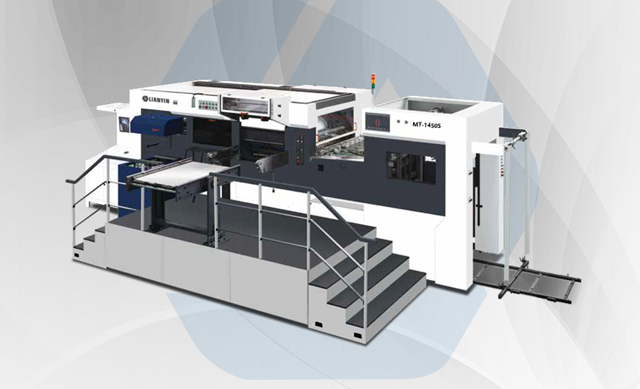
This industry-focused guide provides SEO-friendly, in‑depth information about
automatic deep embossing die cutting machines for global buyers,
sourcing managers, and distributors. It explains definitions, working principles,
advantages, technical specifications, application fields, and evaluation criteria
for top-rated wholesale manufacturers and factories, without promoting any specific brands.
An automatic deep embossing die cutting machine is an industrial
converting system that combines deep embossing and
precision die cutting in a single automated process.
These machines are widely used in the packaging, printing, label,
leather, and specialty materials industries to create raised or recessed
textures and cut complex shapes at high production speeds.
In a typical setup, sheets or rolls of material (such as paperboard, cardboard,
plastic film, synthetic leather, genuine leather, or multilayer laminates) pass
through a matched set of embossing dies under controlled pressure.
The material is deeply deformed to create a 3D pattern, logo, or texture
(deep embossing), and is then shaped or cut by die cutting tools.
Automated feeding, registration, and stacking systems allow for fully automatic,
continuous, and consistent production.
In the global B2B market, buyers often search for terms like
“automatic deep embossing die cutters”,
“automatic embossing and die cutting machine factory”, and
“top-rated deep embossing die cutting manufacturers” to source
reliable equipment at wholesale prices for large-scale packaging and printing operations.
To help buyers and sourcing professionals find relevant information about
automatic deep embossing die cutting machines, the following
industry keywords and phrases are commonly used in search engines, catalogs,
and technical documentation:
Integrating these keyword-rich terms into technical documents,
catalogs, and industry pages helps buyers compare top-rated wholesale
manufacturers and factories without focusing on specific brand names.
Although specific designs vary by factory and model, most automatic deep embossing
die cutting machines follow the process flow below:
Feeding – Material is fed into the machine either
sheet by sheet or from a continuous roll.
Automatic feeders align the material for consistent registration.
Registration & Positioning – Optical sensors, mechanical
side lays, or servo-driven registers ensure the printed graphics, logos,
and embossing patterns are precisely aligned.
Deep Embossing – A pair of matched embossing dies (male and
female) apply high pressure, and often controlled temperature, to deform
the material and create a deep 3D relief. The depth
is typically higher than that of standard embossing.
Die Cutting – After embossing, the material passes through
a die cutting section, where flatbed or
rotary die cutting tools cut, crease, kiss-cut, or perforate
the sheet according to the design.
Stripping & Waste Removal – Unwanted skeleton waste is stripped
from the finished blanks automatically for clean edges and ready-to-use parts.
Delivery & Stacking – Finished sheets, labels, or blanks
are counted and stacked or rewound in a controlled manner for downstream
processes like folding, gluing, or lamination.
| Module | Function | Impact on Deep Embossing / Die Cutting |
|---|---|---|
| Automatic Feeder | Automatically loads sheets or web into the machine. | Ensures stable, continuous production; reduces manual handling. |
| Registration System | Aligns material to the embossing and cutting dies. | Critical for print-to-emboss and print-to-cut alignment accuracy. |
| Embossing Station | Applies pressure and sometimes heat via matched dies. | Determines depth, clarity, and consistency of 3D embossing patterns. |
| Die Cutting Station | Uses steel rules or solid dies to cut and crease. | Defines shape precision, cutting edges, and crease quality. |
| Stripping Unit | Removes internal waste and skeleton automatically. | Improves efficiency and reduces manual waste removal. |
| Delivery & Stacking | Collects finished pieces and stacks or rewinds. | Supports high-volume production and downstream automation. |
| Control System (PLC / HMI) | Controls settings such as pressure, speed, and registration. | Improves consistency, repeatability, and ease of operation. |
Automatic deep embossing die cutting machines offer multiple operational,
aesthetic, and economic benefits that make them attractive for
wholesale packaging, printing, and label factories.
High Automation Level – Automated feeding, registration,
pressure control, stripping, and stacking reduce labor intensity and
minimize operator errors.
High Productivity – Top-rated models achieve
high strokes per hour (SPH) or high meters per minute (m/min),
suitable for large-scale industrial production.
Stable Quality – Closed-loop control systems
maintain consistent embossing depth and cutting accuracy across long runs.
Multi-Process Integration – Embossing, die cutting,
creasing, and sometimes hot foil stamping can be combined to reduce
handling and setup time.
Deep 3D Effect – Deep embossing creates premium, tactile
textures that enhance brand image in packaging and printed products.
Precise Edge Quality – High-quality die cutting results
in clean, burr-free edges and accurate shape tolerance.
Wide Material Compatibility – Machines can process
paperboard, corrugated board (certain grades), plastic film, metallic foil,
composite laminates, synthetic leather, and more.
Customizable Designs – Embossing patterns and die cutting
shapes are fully customized via tooling to match individual brand requirements.
Labor Cost Reduction – Fewer operators are required due
to high automation and integrated workflow.
Lower Waste Rate – Precise control of registration and
cutting parameters minimizes material waste.
High Return on Investment (ROI) – While initial investment
may be significant, high throughput and premium product value enable rapid payback.
Scalability – Top-rated wholesale machines are designed for
continuous operation in factory environments, supporting business growth.
Automatic deep embossing die cutting machines are essential equipment across
multiple industries where high-value appearance and precise cutting are required.
| Industry | Typical Products | Role of Deep Embossing & Die Cutting |
|---|---|---|
| Luxury Packaging | Perfume boxes, cosmetics packaging, premium gift boxes. | Creates high-end embossed logos, textures, and precise box blanks. |
| Food & Beverage | Wine boxes, chocolate packaging, specialty food cartons. | Enhances shelf impact, adds tactile branding, and cuts complex shapes. |
| Label & Stickers | Embossed labels, security labels, wine labels, brand seals. | Provides premium embossed effects, kiss-cutting, and precise outlines. |
| Stationery & Greeting Cards | Embossed greeting cards, invitations, certificates, notebooks. | Delivers professional 3D textures and shaped edges. |
| Bookbinding & Publishing | Embossed book covers, slipcases, special editions. | Applies deep embossing to titles, logos, and decorative patterns. |
| Leather & Synthetic Materials | Wallets, belts, bags, automotive interior trims. | Imprints deep textures and logos onto leather or synthetic substrates. |
| Electronics & Consumer Goods | Device packaging, premium accessory boxes, tags. | Improves perceived value through embossed branding and accurate cuts. |
Top-rated wholesale manufacturers and factories typically offer several machine
types to cover different processing scales and materials.
Sheet-Fed Automatic Deep Embossing Die Cutting Machines
Suitable for medium to heavy board and high-value printed sheets.
Common in packaging and commercial printing factories.
Roll-to-Roll (Web-Fed) Deep Embossing Die Cutting Machines
Designed for flexible materials such as films, labels, thin paper,
and laminates. Ideal for long runs and continuous processing.
Flatbed Die Cutting with Deep Embossing
Utilizes a flatbed platen structure; excellent for high precision and
heavy-pressure deep embossing on thicker board.
Rotary Die Cutting with Embossing
Uses rotary cylinders; suitable for thinner materials and very high speed
roll-to-roll lines, often used for labels and films.
Semi-Automatic Deep Embossing Die Cutting Machines
Partial automation (e.g., manual feeding with automatic cutting and delivery),
suitable for smaller factories and short runs.
Fully Automatic Deep Embossing Die Cutting Machines
Automated feeding, registration, embossing, die cutting, stripping, and stacking;
preferred by large-scale converters and top-rated factories.
Technical parameters vary among different automatic deep embossing die
cutting machines. The following table summarizes the most common specification
ranges offered by global wholesale manufacturers and OEM factories.
| Parameter | Typical Range / Value | Description & Notes |
|---|---|---|
| Max. Sheet Size | From 750 × 520 mm up to 1450 × 1100 mm or more | Defines largest sheet format suitable for packaging and printing jobs. |
| Min. Sheet Size | Approx. 280 × 220 mm to 400 × 350 mm | Minimum sheet size that can be reliably fed and processed. |
| Material Thickness | Paper: 80–600 gsm; Board: up to 4–5 mm (model dependent) | Indicates compatibility with thin paper, folding carton board, and some corrugated grades. |
| Max. Embossing Pressure | 150–350 tons (flatbed models), sometimes higher | Higher tonnage supports deeper embossing and thicker substrates. |
| Embossing Depth | Typically 0.3–1.5 mm or more (depending on material) | Actual depth influenced by material properties and die design. |
| Max. Cutting Speed | 4,000–8,000 sheets/hour (sheet-fed) or 60–180 m/min (roll-fed) | Top-rated models for high-volume production may reach the upper limits. |
| Registration Accuracy | ±0.10–0.20 mm | Critical for precise print-to-cut and print-to-emboss alignment. |
| Heating System (if equipped) | Ambient to 150–200 °C (adjustable) | Heated embossing dies improve definition in certain materials like synthetic leather. |
| Main Drive | AC motor or servo motor drive | Servo systems offer more precise motion control and faster changeovers. |
| Control System | PLC + HMI (touchscreen interface) | Allows recipe storage, quick setup, and monitoring of production parameters. |
| Power Supply | Typically 380–480 V, 50/60 Hz, 3-phase | Industrial power configuration, varies by country and region. |
| Air Consumption | 0.4–0.8 MPa compressed air; specific L/min depends on model | Needed for pneumatic functions such as grippers and stripping units. |
| Machine Weight | 5,000–25,000 kg or more | Depends on format size, tonnage, and construction materials. |
| Overall Dimensions | Typical length 4–10 m; width 2–4 m; height 2–3 m | Space planning is crucial for in-line and off-line factory layouts. |
Automatic deep embossing die cutting machines are engineered to process a wide
range of substrates in the packaging, printing, and converting industries.
| Material Category | Examples | Typical Applications |
|---|---|---|
| Paper & Paperboard | Coated paper, art paper, kraft paper, folding carton board. | Consumer goods boxes, cards, brochures, certificates. |
| Corrugated Board | Microflute, E-flute, and some B-flute grades. | Protective packaging, shipping boxes with embossed logos. |
| Plastic Film & Foils | PVC, PET, PP, metallic foils, laminates. | Labels, flexible packaging, security films, decorative foils. |
| Laminated Materials | Paper–foil, paper–film, multilayer composites. | Premium packaging, anti-counterfeit labels, brand seals. |
| Leather & Synthetic Leather | PU, PVC leather, genuine leather (selected machine models). | Wallets, bags, belts, notebook covers, automotive trims. |
| Specialty Substrates | Textured papers, pearl papers, board with coatings. | Luxury boxes, high-end cards, limited edition packaging. |
When sourcing from wholesale manufacturers or factories, buyers should always
confirm the material compatibility and perform practical tests
to validate embossing depth and cutting performance for their specific substrate mix.
Selecting a top-rated automatic deep embossing die cutting machine
manufacturer involves assessing technical capability, manufacturing
quality, service support, and long-term reliability, rather than focusing only
on price. The following factors are widely used in B2B evaluations:
R&D Strength – Factories with dedicated research and development teams
can offer innovative automation features, higher efficiency, and customized solutions.
Manufacturing Capacity – Ability to handle large orders, stable lead times,
and flexible production planning for OEM/ODM projects.
Precision Manufacturing – Availability of CNC machining, quality casting,
and strict assembly standards for high tonnage embossing and accurate die cutting.
Quality Management Systems – Adoption of documented quality procedures
and continuous improvement practices.
Product Testing – Mechanical, electrical, and durability testing of
Automatic Embossing Die Cutting Machines before shipment.
Certifications & Standards – Compliance with relevant standards
(for example, electrical safety, machinery directives, and environmental requirements).
Embossing Pressure & Depth – Ability to achieve consistent deep embossing
for high-grammage board and difficult materials.
Speed & Efficiency – Whether rated production speed can be
maintained in real-world conditions with typical substrates.
Ease of Setup – Quick changeover of embossing and die cutting tools
reduces downtime in busy packaging and printing factories.
Integration Options – Possibility to connect with upstream printing
and downstream folding–gluing lines in automated workflows.
Installation & Commissioning Support – On-site or remote technical support
during machine startup.
Operator Training – Provision of training programs and manuals for
machine operation, maintenance, and safety.
Spare Parts Availability – Stock of critical components and clear
lead times for specialized parts such as embossing cylinders or platens.
After-Sales Response Time – Ability to respond quickly to service calls,
remote diagnostics, and technical questions.
Wholesale Pricing Structure – Transparent pricing for different
configurations and volume discounts for distributors.
Warranty Period – Standard warranties on main parts and
availability of extended protection plans when needed.
Customization Capability – Willingness to provide tailored
machine configurations, colors, control interfaces, or private labeling
for OEM partners.
When evaluating potential equipment for a factory or converting plant, buyers
should compare technical parameters, application fit, and operating costs
across multiple automatic deep embossing die cutting machine models.
| Feature Category | Typical Options | Selection Considerations |
|---|---|---|
| Feeding Mode | Sheet-fed vs. roll-to-roll (web-fed) | Choose sheet-fed for board and carton work; web-fed for labels and films. |
| Die Cutting Type | Flatbed vs. rotary | Flatbed for deep embossing and heavy board; rotary for very high-speed flexible materials. |
| Automation Level | Semi-automatic vs. fully automatic | Fully automatic machines are better for continuous industrial production. |
| Embossing Capability | Standard embossing vs. deep embossing with heating | Deep embossing with heating is recommended for heavy and synthetic substrates. |
| Control System | Basic PLC vs. advanced PLC with servo drives | Advanced control systems provide better accuracy and faster changeovers. |
| Stripping Function | Manual, semi-automatic, or fully automatic stripping | Automatic stripping reduces labor and improves throughput. |
| Safety Features | Standard guards vs. integrated safety light curtains & interlocks | Ensure full compliance with local safety regulations and high operator safety. |
| Machine Size | Small, medium, large format | Match to product size range and available plant floor space. |
Reliable operation of an automatic deep embossing die cutting machine depends on
proper setup, regular maintenance, and trained operators. Top-rated manufacturers
provide clear manuals and training to help factories maximize equipment performance.
The quality of embossing dies and cutting tools directly affects final product quality:
When negotiating with wholesale factories and manufacturers, buyers should consider
not only the purchase price but also total cost of ownership (TCO).
| Cost Element | Description | Buyer Considerations |
|---|---|---|
| Equipment Purchase Price | Initial cost of the automatic deep embossing die cutting machine. | Compare specifications and level of automation vs. price. |
| Tooling & Dies | Embossing plates, cutting dies, stripping tools. | Budget for initial tooling investment and periodic replacement. |
| Installation & Training | On-site setup, alignment, and staff training. | Clarify whether included in price or charged separately. |
| Energy Consumption | Electricity and compressed air usage during operation. | Review rated power and typical operating load for cost estimation. |
| Maintenance & Spare Parts | Routine maintenance, replacement of wear parts, service calls. | Check availability and pricing of consumable and critical parts. |
| Downtime Cost | Production loss during breakdowns or long changeovers. | Higher reliability and fast service reduce hidden downtime costs. |
Standard embossing typically produces relatively shallow relief for simple logos or text,
while deep embossing applies higher pressure and often uses thicker dies
to create a more pronounced 3D effect. Deep embossing requires robust machines with
higher tonnage and precise control of pressure, alignment, and sometimes temperature.
Yes. Many automatic deep embossing die cutting machines integrate both
functions in a single production line. The material is first embossed and then die cut,
which reduces handling and ensures perfect registration between embossed areas and cut shapes.
Heavy paperboard, high-grammage coated paper, certain corrugated grades, and various synthetic
materials respond well to deep embossing. Materials with sufficient thickness and plasticity
can retain the deep relief without cracking when properly processed.
Tonnage indicates the maximum pressure the machine can apply. Deeper embossing on thick or
rigid substrates requires higher tonnage to form clear relief without damaging the material
or the tooling. Buyers should match tonnage to the most demanding applications they plan to run.
Not all automatic deep embossing die cutting machines include heated embossing stations.
Some applications, especially with synthetic leathers or plastic films, benefit from
controlled heating to improve emboss definition. Buyers should confirm whether
heating capability is standard or optional in the selected model.
Many manufacturers and OEM factories offer customization options, such as infeed and outfeed
direction, additional automation modules, or tailored control systems. Discuss layout and
integration requirements with the manufacturer at the quotation stage.
Automatic deep embossing die cutting machines have become a core technology
for high-value packaging, printing, label, and leather product manufacturing. By combining
deep embossing and precision die cutting in a fully automated line, these machines
help factories achieve premium product appearance, high productivity, and
competitive operating costs.
When sourcing from top-rated wholesale manufacturers and OEM factories,
buyers should carefully evaluate technical specifications, embossing and cutting performance,
automation features, service capability, and total cost of ownership. A properly selected
and well-maintained automatic deep embossing die cutting machine can support long-term growth
in demanding international markets and ensure consistent quality for branded products.
```
NÚMERO DE CONTACTO +86 18713883276(IGUAL QUE WHATSAPP) Correo: tslianshun@126.com
Dirección: pueblo de CAI he dong, pueblo de CAI ting Qi AO, condado de Y UT Ian, ciudad de Tangshan, provincia de Hebei
Copyright © 2025 Tangshan Lianshun Printing Machinery Manufacturing Co., Ltd. Todos los derechos reservados


Este sitio web utiliza cookies para garantizar que obtenga la mejor experiencia en nuestro sitio web.

 English
 Portugues
 Pусский
 العربية
 中文



 Teléfono
Comentario
(0)